
Common Garage Door Problems and When to Call
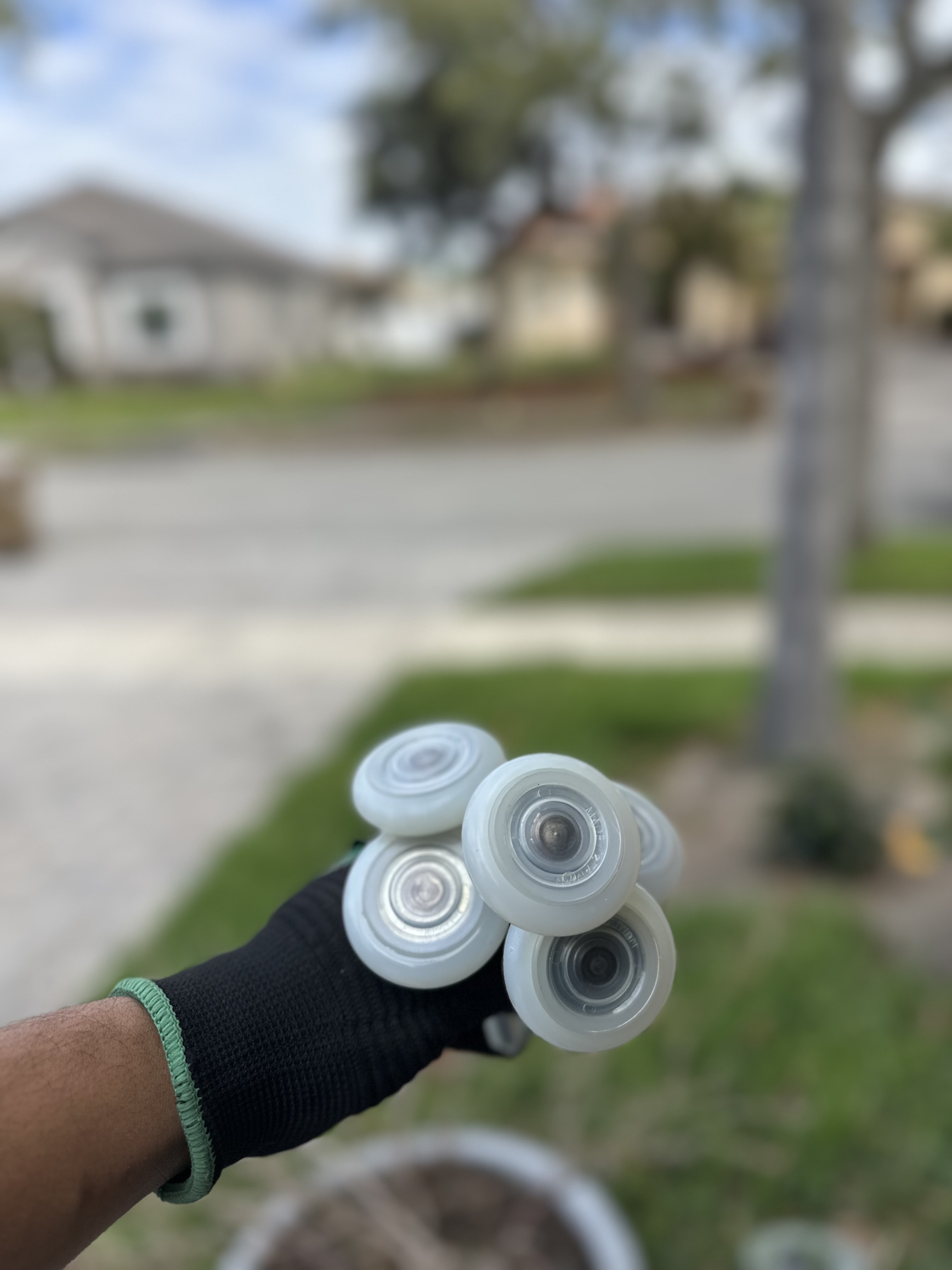
Most garage door service calls start with a recognizable sign: a door that won't open or close, a loud bang from above, a door that's come off its tracks, or a remote that's stopped responding. Each of these common problems can have more than one cause, and some point to parts that are unsafe to handle yourself. This guide walks through the problems Compres Garage Doors sees most often across Central Florida, what each one may mean, what to avoid doing, and when to stop using the door and call for service.
A garage door is a heavy, balanced system, and when one part fails the signs usually show up in how the door moves or sounds. The same symptom can come from very different causes, which is why a technician inspects the whole system on site rather than diagnosing from a single description. What you can do safely is recognize the sign, avoid the parts of the door that are dangerous to handle, and call for service at the right time.
This article describes common problems as possibilities, not a remote diagnosis of your door. If a sign suggests the door may be unsafe, stop using it and request service. Compres Garage Doors repairs residential and commercial garage doors at your property across the confirmed service area, from Poinciana to Sanford.
The door won't open or won't close completely
A door that won't move is the most common reason people call. It can mean the door won't open at all, won't close all the way, or stops and reverses partway through its travel. Several different parts can cause it, and the cause changes what's safe to do next.
Possible causes
- A broken torsion or extension spring, which makes the door too heavy for the opener to lift.
- A broken or detached lift cable, which can leave the door hanging crooked.
- A tripped or failed opener, a disconnected drive, or a dead remote.
- Misaligned or blocked safety sensors that reverse the door before it closes.
- A bent track or jammed roller that physically blocks the door's travel.
Because a broken spring and a dead remote produce the same symptom — the door doesn't move — but call for very different responses, the cause matters. If the door feels dangerously heavy or you heard a bang, treat it as a spring or cable problem and don't force it. If the wall button and remote both do nothing but the door lifts smoothly by hand, it may be the opener.
What to avoid: don't force a stuck door with the opener or by hand, and don't keep pressing the button if the door strains. Forcing a door with a broken spring can damage the opener or cause the door to fall. See our garage door repair page for what a visit covers.
Request garage door repair
A loud bang and a door that won't lift
A sharp bang from above the door is a distinctive sign, and it usually points to one cause: a spring has broken. Garage door springs carry the door's full weight, and when one fails under tension it releases that energy as a loud noise. After the bang, the door often won't lift, or it feels extremely heavy when you try to raise it by hand.
What it may mean
A broken spring means the door is no longer balanced. The opener may run but can't lift the unbalanced weight, or the door may be too heavy to lift safely by hand. You may also see a visible gap in a torsion spring or a spring that's come apart.
What to avoid: never attempt to adjust, wind, or remove a garage door spring. Springs are under high tension and are one of the most dangerous parts to handle without the right tools and training. A technician inspects the springs, confirms the cause, and replaces the failed spring safely. See our garage door spring repair page for more.
Request garage door spring repair
The door is off its tracks or sits crooked
When a garage door comes off its tracks, it may sit crooked in the opening, jam partway up or down, or hang with one side lower than the other. Rollers may have come out of the track, or the track itself may be bent or misaligned. An off-track door is both a function problem and a safety problem.
Possible causes
- A broken lift cable that let one side drop.
- Rollers that jumped the track after an impact or worn hardware.
- A bent or loose track that let the rollers escape.
- A door that was forced while off balance.
An off-track door can be heavy and unstable, and trying to force it back onto the tracks can cause it to fall or jam further. The safe response is to stop using the door and keep the area clear until a technician can reposition it and inspect what caused it to come off.
What to avoid: don't try to lift, push, or pry the door back onto the tracks yourself. A technician repositions the door safely and checks the cables, rollers, and tracks that may have caused it. See our off-track garage door repair page.
Request off-track door repair
The opener runs but the door doesn't move
Hearing the opener motor run while the door stays put is a confusing sign, because the opener can sound fine while the problem is elsewhere. The motor is working, but something between the motor and the door isn't transferring the motion.
Possible causes
- A broken spring that made the door too heavy for the opener to lift.
- A stripped gear, broken belt, or broken chain inside the opener drive.
- A disconnected trolley or carriage after the emergency release was pulled.
- A jammed roller or bent track that's physically blocking the door.
This is a good example of why the symptom alone doesn't tell you the cause. The opener may be perfectly fine while a broken spring is the real issue, or the opener's drive may have failed while the door is sound. A technician tests the opener and the door's springs and hardware together to find the actual cause.
What to avoid: don't keep running the opener if the door doesn't move. Repeated attempts can strip the drive or add strain to already-worn parts. Stop and request service. See our garage door opener page for opener service and installation.
Request opener service
The door reverses before it closes
A door that starts down and then reverses back up before closing is a common problem, and it often points to the safety system doing its job. The photoelectric sensors near the floor are designed to reverse the door if anything breaks the beam. When the sensors are misaligned, dirty, or faulty, the door can reverse even when the path is clear.
Possible causes
- Misaligned or bumped sensors that can't see each other.
- Dirt or cobwebs on the sensor lenses.
- A faulty sensor or damaged wiring.
- Opener force or travel limits that are set too sensitively.
- Something actually blocking the door's path.
You can safely check whether anything is blocking the path and whether the sensor lenses look dirty or knocked out of alignment. If the path is clear and the lenses are clean but the door still reverses, the cause is likely inside the sensor or opener settings, and a technician checks the sensors and opener on site.
What to avoid: don't disable or bypass the safety sensors. They're there to stop the door from closing on a person, pet, or object. See our garage door sensor repair page for more.
Request sensor repair
Loud, grinding, or squeaking operation
Noise is one of the earliest signs of wear. A door that used to run quietly and has become loud is telling you a part needs attention. The type of noise can hint at the source: a squeak often points to dry rollers or hinges, a grind can mean worn rollers or a worn opener drive, and a rattle can come from loose hardware.
Possible causes
- Dry or worn rollers and hinges that need lubrication or replacement.
- A worn opener belt, chain, or gear.
- Loose brackets or fasteners rattling with each cycle.
- Early spring wear that's adding strain to the system.
Noise isn't always dangerous, but it's worth taking seriously because it usually means a part is wearing. Catching it early often means a smaller service — lubrication or a roller replacement — rather than a larger repair after the worn part fails and adds strain to the opener and springs.
What to avoid: don't lubricate or adjust springs yourself, and don't ignore a noise that's getting louder. A maintenance visit can address the cause before it becomes a repair. See our garage door maintenance page.
Schedule garage door maintenance
When to stop using the door and call
Some signs mean you should stop using the door right away rather than wait. These are the situations where continuing to operate the door can cause further damage or create a safety risk:
- A loud bang and a door that won't lift — likely a broken spring.
- A door that's off its tracks or hanging crooked.
- A frayed or broken cable.
- A door that feels dangerously heavy or won't stay up.
- A door that fell or was hit and may be structurally damaged.
In these cases, keep people, pets, and vehicles clear of the door's path and don't try to force it. The safe next step is to stop using the door and request service. A technician inspects the door and its components on site and recommends the right repair based on what they find.
What a technician inspects
When you call, the technician doesn't just look at the part that seems broken. Because the door's parts work together, the inspection follows the whole system:
- The springs and cables for breakage, wear, and balance.
- The tracks and rollers for alignment, obstructions, and roller condition.
- The opener, drive, remotes, and wall station.
- The safety sensors and opener reversal settings.
- The hinges, brackets, and hardware for looseness or wear.
After the inspection, the technician explains what they found and recommends the right service. That recommendation comes from what's actually wrong on site, not a guess from the symptom you described on the phone.
Calling Compres Garage Doors
If you recognize any of the problems in this guide, the next step is to call. Compres Garage Doors repairs residential and commercial garage doors at your property across Central Florida, from Poinciana to Sanford. Call (689) 200-9378 or request service online, describe what you're seeing and hearing, and we'll confirm coverage at your address and schedule a visit.
You don't need to know what's wrong before you call. A clear description of the sign — the door won't open, there was a bang, the door is off its tracks — gives the technician a useful starting point. The inspection does the rest. You can also browse our service areas to see the communities we serve.
View our service areas
Frequently asked questions
Why won't my garage door open or close?
It can have several causes — a broken spring, a broken cable, a tripped opener, a dead remote, or misaligned safety sensors. Because the same symptom can come from different parts, a technician inspects the whole system on site to find the actual cause.
What does a loud bang from my garage door mean?
A sharp bang usually means a spring has broken. After the bang the door may not lift or may feel very heavy. Don't try to lift it or run the opener; stop using the door and request spring service. Springs are under high tension and should only be handled by a technician.
Can I push my door back onto the tracks myself?
No. An off-track door can be heavy and unstable, and forcing it can cause it to fall or jam further. Keep the area clear and let a technician reposition it safely and inspect what caused it to come off.
Why does my opener run but the door doesn't move?
The motor may be fine while the problem is elsewhere — a broken spring, a stripped gear, a broken belt or chain, or a disconnected trolley. A technician tests the opener and the door's springs and hardware together to find the real cause.
Why does my door reverse before it closes?
It's often the safety sensors reversing the door because they're misaligned, dirty, or faulty, or because something is in the path. Check that the path is clear and the lenses are clean; if it still reverses, a technician checks the sensors and opener settings on site.
Should I keep using a noisy garage door?
Noise usually means a part is wearing. It's not always dangerous, but it's worth addressing early before the worn part fails and adds strain to the opener and springs. A maintenance visit can find and address the cause.
When should I stop using the door and call?
Stop and call if you hear a bang, the door is off its tracks, a cable is frayed, the door feels dangerously heavy, or the door was hit and may be damaged. Keep the path clear and don't force it — request service and let a technician inspect it on site.
Where do you provide garage door repair?
Across Central Florida, from Poinciana to Sanford. Service availability depends on the specific address, so confirm coverage when you call (689) 200-9378.
Recognize a problem? Let's get your door moving safely.
Call Compres Garage Doors at (689) 200-9378 or request service online. We repair residential and commercial garage doors at your property across Central Florida, from Poinciana to Sanford.
This article describes common garage door problems as possibilities and does not diagnose your specific door. Springs, cables, and heavy components are under high tension and should only be serviced by a technician. An on-site inspection confirms the actual cause.